

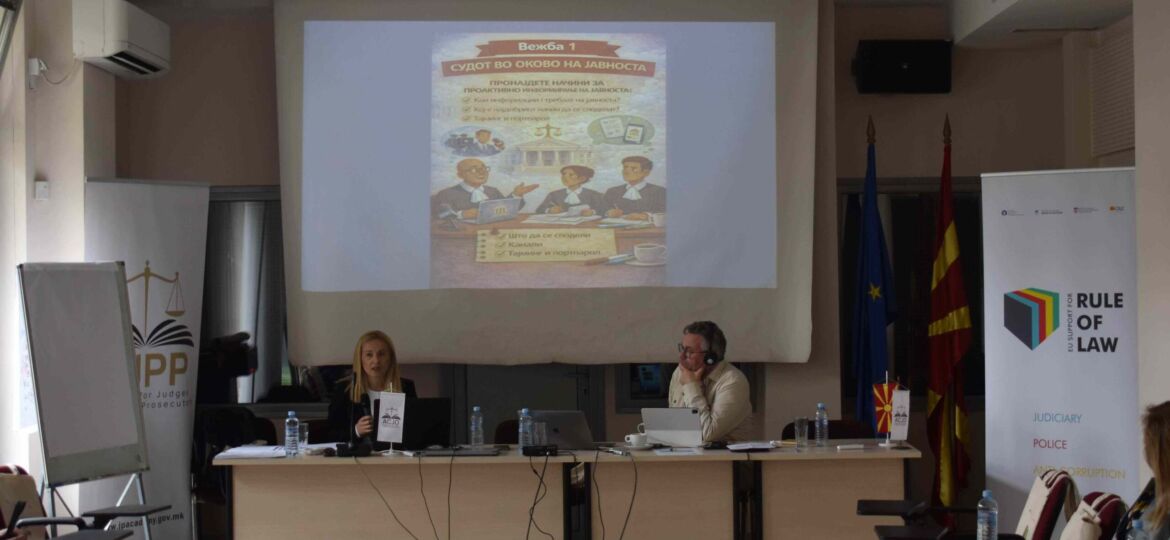
In April 2026, the EU Support for Rule of Law Project, in cooperation with the Academy for Judges and Public Prosecutors, conducted three specialized trainings on practical skills for transparent and proactive communication with the public. The capacity-building events were designed for court presidents, judges, public prosecutors, judiciary spokespersons, and members of the Judicial Council and the Council of Public Prosecutors. The focus of the trainings was to support the implementation of both the judicial and prosecutorial communication strategies, which aim to establish a unified communication policy, improve transparency, and professionalize public relations within the justice system.
To build better relationships between the justice system and the media, the events covered topics such as the importance of transparency, understanding journalistic practices, and the skill of translating complex legal terminology into clear messages that the general public can easily understand. Furthermore, participants engaged in targeted modules focused on navigating media realities, establishing guidelines on what information can and cannot be legally disclosed, and managing sensitive, high-profile cases.
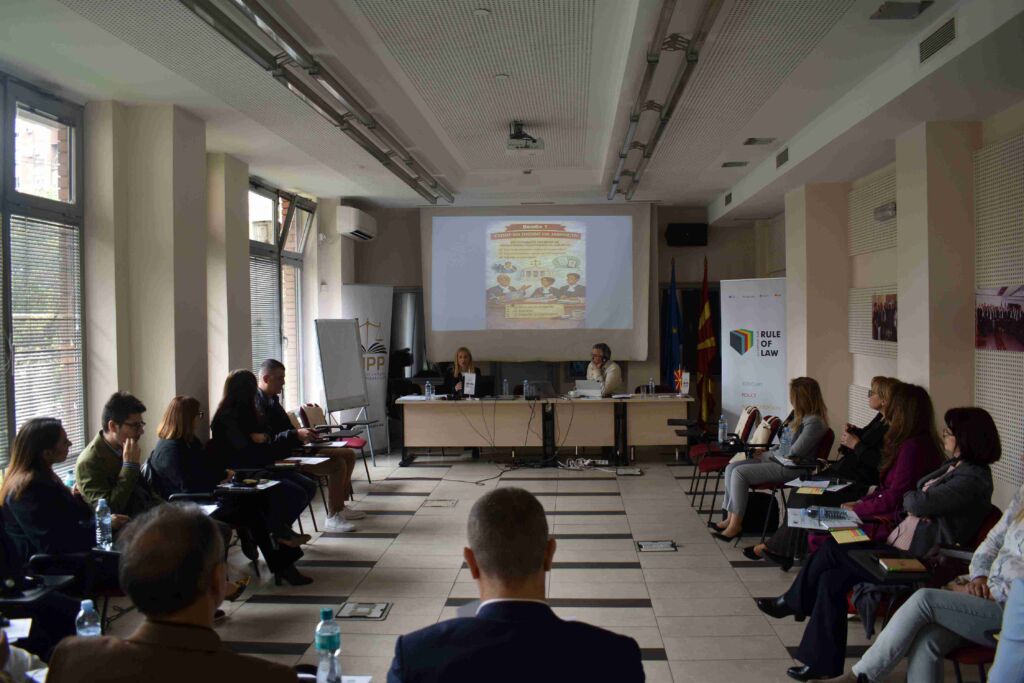
Practical exercises included crisis communication simulations, delivering statements to the camera under pressure, and strategies to improve cooperation between justice institutions and the media. The training also covered how to communicate effectively within the institutions themselves, giving leaders practical ways to deliver tough news and handle internal disagreements.
The training modules were developed and co-delivered by a team of international and local experts, ensuring an integration of European standards with the specific legal frameworks and practical realities of the Macedonian media landscape.
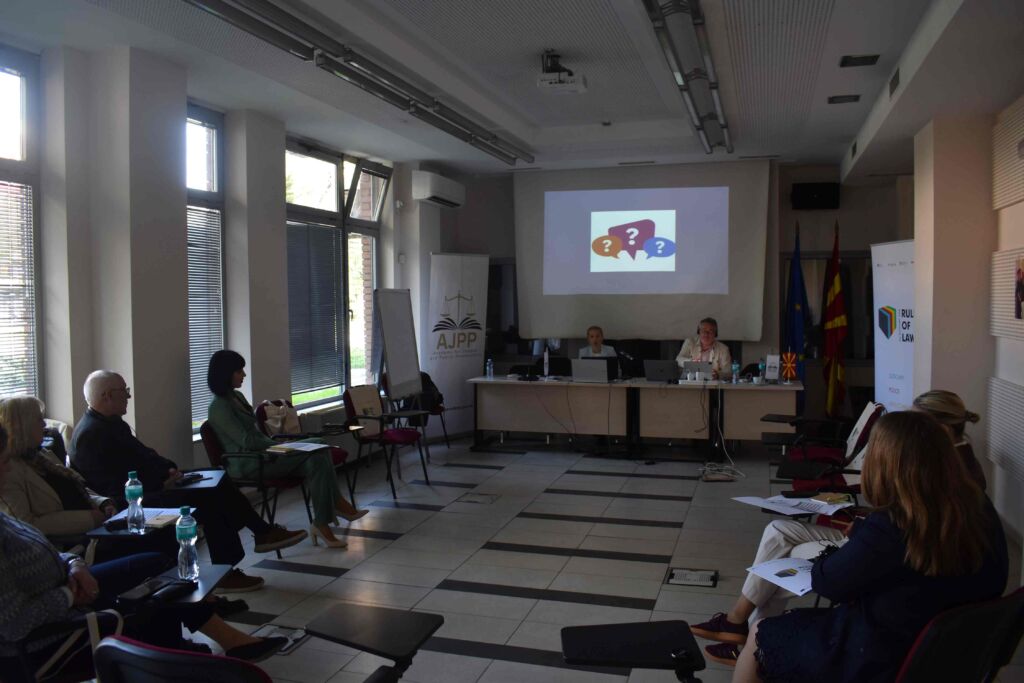
Enhancing the capacities of justice institutions to operate in a transparent and accountable manner is one of the main objectives of the Project. By equipping judiciary and prosecutorial leaders and spokespersons with modern, proactive communication tools, this initiative plays an important role in improving and maintaining public trust, helping to build a more open and resilient legal community.